Queue Management for Restaurants and Cafés: Managing Walk-In Customers
The Sedia team · · 9 min read
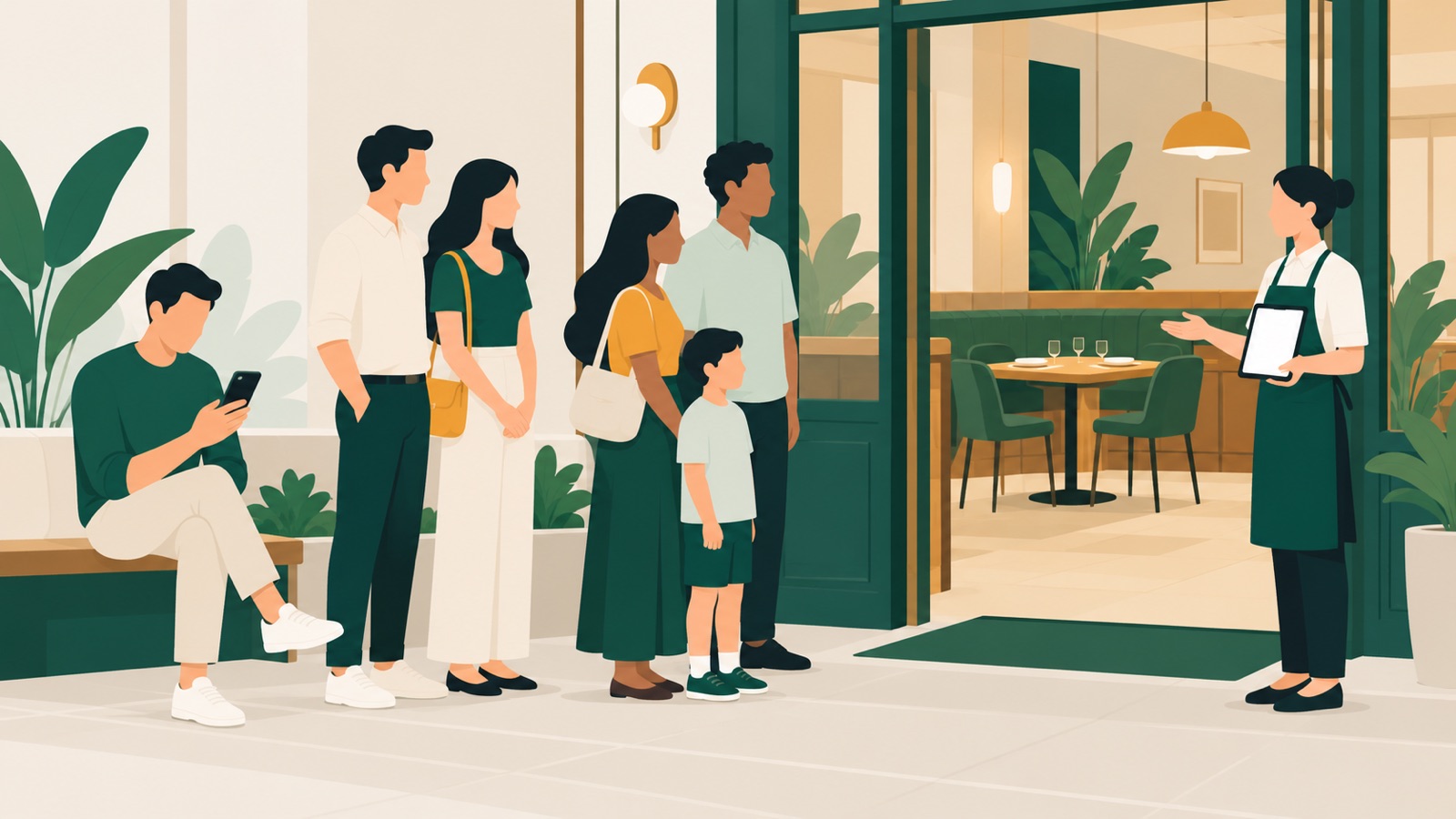
A lunch queue can become untidy quickly. Two colleagues are waiting for a small table, a family needs more seats, a reservation has arrived early, and another party has stepped away after being quoted a wait. The host has to keep all of them moving without blocking the entrance or leaving an empty table unused.
The short answer: run one current waitlist that records party size, arrival route and status, then match each ready table to a suitable party. Quote a wait range rather than a precise promise, set one clear table-hold rule, and notify diners when they should return. Keep reservations and walk-ins visible in the same host view so the team can make one consistent decision at a time.
How should a restaurant waitlist work?
A useful waitlist follows the whole visit from arrival to seating. It is not merely a list of names and phone numbers.
| Stage | What the host does | What the diner needs to know |
|---|---|---|
| Join | Record party size, contact route and any seating constraint that affects the match | That the party is on the list |
| Quote | Give a realistic wait range based on the queue and tables in use | Roughly when to stay close or return |
| Wait | Update the party if the line changes and keep their status current | How the queue is moving |
| Ready | Match the party to a suitable table and send a clear return message | That the table is ready and what to do next |
| Hold | Keep the table for the stated period while checking for a response | How long the table will be held |
| Seat or release | Mark the party seated, deferred or no-show before calling another party | Whether they still have a place |
Every join route should feed this same list. A diner who scans a QR code, a party entered by the host and a reservation checking in should not become three separate queues. The practical flow is similar to the wider process in how a queue management system works, but restaurants add one important constraint: the next free table may not fit the first party.
What details should you collect from walk-in diners?
Start with the details that change the host's next action:
- party size;
- first name or another short identifier;
- phone number if you will send a ready alert;
- indoor, outdoor or accessibility needs where these affect seating; and
- whether the whole party is present, if that is part of your seating policy.
Avoid turning the join step into a long booking form. Birthday notes, marketing preferences and a full customer profile do not help the host find the next suitable table. If a diner has no usable phone, staff should still be able to add them and agree where they will wait.
How should you match party sizes to tables?
A restaurant queue is not always first in, first out. If a table for two becomes free, seating a pair does not unfairly overtake a party of six when the larger party could not use that table. The host is matching demand to the resource that is actually available.
Define the matching rules before the rush. Note the seats at each table, which tables can be joined, whether a larger table may be used for a small party, and who can approve an exception. The host should be able to see which parties fit without relying on memory or calling several groups in turn.

Keep the order understandable. Within the set of parties that fit a table, the longest-waiting suitable party is a clear starting rule. If you depart from it because of an accessible table, a joined-table constraint or another genuine need, record the reason briefly so the next host sees the same picture.
Sedia's restaurant waitlist page describes party-size matching and one host view for booked tables and walk-ins. The point is not to automate every judgement. It is to give the host enough current information to make the judgement quickly and consistently.
How do you quote an accurate restaurant wait?
Quote a range, not an exact seating time. Table turns vary, and a diner finishing dessert can make a single-number promise wrong within minutes. A range gives the guest something useful without pretending that the host controls every table.
Before quoting, look at more than the number of parties ahead. Consider:
- how many waiting parties could use the same table type;
- which occupied tables appear close to finishing;
- upcoming reservations that need those tables;
- whether tables must be cleared or joined; and
- whether the kitchen or service team has asked the host to slow seating.
Do not quietly leave an old quote in place when the room changes. If a large party stays longer or a table goes out of use, update the range and tell affected diners. A later but honest update is more useful than an earlier promise that nobody now expects to meet.
Sedia plans to show diners an estimated wait range on their phone, worked out from the restaurant's own past service times and updated through the day. The range gets better as the business builds up history. Wait estimates are planned for Essentials and above; the full plan breakdown is on the pricing page.
How should reservations and walk-ins share the same service?
Reservations protect future capacity; walk-ins fill demand now. The host needs both in one view, while keeping the promise made to each booked party.
Write a simple rule for the common cases:
| Arrival | Practical host action |
|---|---|
| Reservation arrives on time | Check the party in and place it in the current seating flow with the agreed priority |
| Reservation arrives early | Mark it present, but do not promise the table before its booked time |
| Reservation arrives late | Apply the restaurant's stated grace policy, then tell the party what is now possible |
| Walk-in arrives before a booked table is needed | Seat the walk-in only if the expected turn will not compromise the reservation |
| Table becomes free with several parties waiting | Match by table fit, reservation commitment and the restaurant's stated order |
The rules should be visible to the team, not held only in the most experienced host's head. During a handover, the incoming host needs to know which reservations are present, which walk-ins are nearby and which table has already been promised.
How long should you hold a table for a walk-in?
There is no useful universal hold time. A compact café where diners wait next door can use a different rule from a large restaurant where the return walk takes longer. Choose a period that fits the premises, state it when the diner joins, and apply it consistently.
Use the same sequence each time:
- Confirm that the table is actually ready before sending the ready message.
- Tell the diner where to report and that the table will be held for the stated period.
- Record when the message was sent and whether the party responded.
- Try the agreed fallback if the main notification is missed.
- When the hold expires, mark the party deferred or no-show before offering the table elsewhere.
Do not send “table ready” merely to bring several parties back to the doorway. If the team wants a party closer, use a separate “you are nearly up” alert. That distinction keeps the entrance clear and makes the final call mean something.
What should happen during a peak CBD lunch?
At a CBD lunch service, many diners have a fixed return-to-work time. The host should ask about that constraint before accepting the party, then give a range that lets them decide whether to join.
Prepare before the first cluster arrives. Check which tables are open, which reservations are due, who is responsible for clearing each section and how the host will hear that a table is ready. Keep one staff member accountable for changing waitlist statuses, even if several people greet diners.
During the peak, use short status labels that reflect reality: waiting nearby, asked to return, table held, seated, deferred or no-show. When a diner says they cannot make the quoted range, remove or defer the party instead of leaving a doubtful entry near the top.
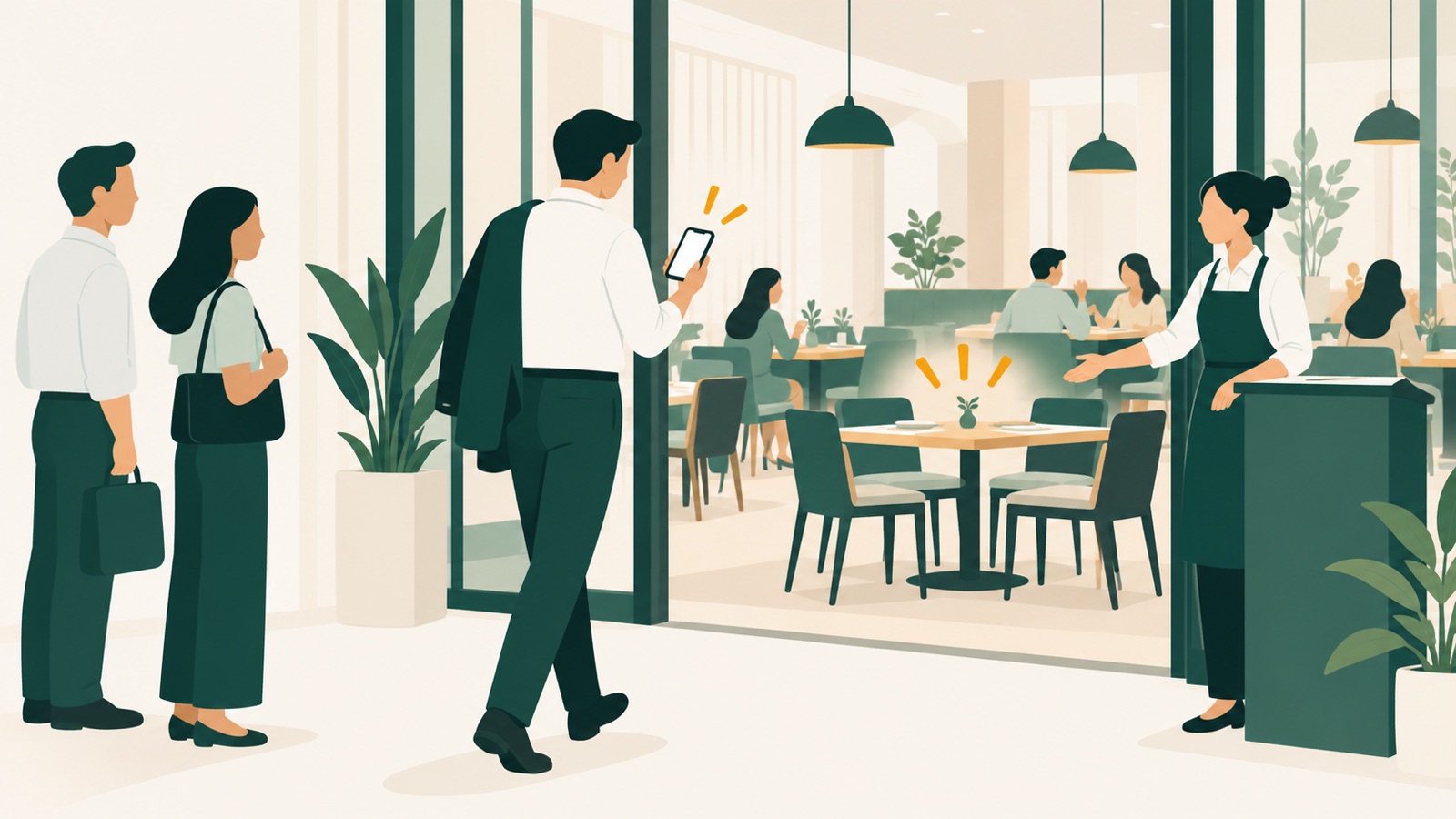
After lunch, review the difficult interval while it is still fresh. Was the quote wrong because tables turned slowly, because parties could not be reached, or because the host did not hear that a table had been cleared? Those causes need different fixes.
What should a table-ready notification say?
Keep operational messages short. A useful set has three different jobs:
- Join confirmation: the party is on the waitlist and can see its current range.
- Return alert: the party is getting close and should come back to the entrance.
- Ready alert: the table is ready, where to report and how long it will be held.
Use the channel diners will notice during a short wait. Sedia's planned features include web push and email, with WhatsApp and SMS through prepaid credits. The customer's live ticket can show how many are ahead and a wait range, while the host remains responsible for exceptions and clear face-to-face instructions.
Which restaurant queue metrics are useful?
Start with measures tied to a decision:
- quoted range compared with the actual seating wait;
- join-to-ready and ready-to-seated time;
- no-shows and parties that leave before being seated;
- wait and service time by lunch, dinner and quieter periods; and
- the table sizes that most often leave a suitable party waiting.
Do not read one busy shift as a trend. Compare similar weekdays and service periods, then change one rule at a time. Sedia's planned analytics cover wait time, service time, no-shows and busy hours by location and service.
Frequently asked questions
Should a restaurant seat walk-ins strictly in arrival order?
Not always. The next table must fit the party, and a reservation may already hold future capacity. Use arrival order among parties that are suitable for the same table, then record genuine exceptions.
Should you quote a waiting time or the number of parties ahead?
A wait range is usually more useful because parties ahead may need different table sizes. Showing both the range and queue progress can help, provided the information stays current.
What happens if only part of a party is present?
Set a house rule and tell diners when they join. If you seat only complete parties, record whether everyone is present so the host does not discover the issue after holding a table.
Can a café use the same workflow without reservations?
Yes. Keep the reservation fields out and use the same steps for joining, quoting, matching, calling and seating. A small café may need only a QR code, a staff screen and a phone alert.
Sedia is a pre-launch queue and booking system for Singapore restaurants and cafés. It is designed to keep party sizes, walk-ins, checked-in reservations, wait ranges and ready notifications in one host workflow. You can register your interest to hear when it is ready.